There’s a particular hour in Lower Manhattan — call it 7:40 on a weekday morning — when the light comes sideways off the harbor and hits the stone canyon of Wall Street like a flashlight down a hallway, and I think that’s the moment the best things to do in Financial District start making sense. I remember standing near the corner of Broad and Wall once with a paper coffee going cold in my hand, listening to a street sweeper grind past and the low harbor foghorn behind it, and realizing the neighborhood smells like river and diesel and, faintly, money. Most visitors show up at noon, when the plazas are elbow-to-elbow and every sightline has a selfie stick in it. That’s the version of FiDi people complain about. The other version — early, quiet, echoing — is one of the strangest and most beautiful pockets in the city, and it’s free.
📍 James Carter’s NYC Map — Every spot I mention in this Best things to do in the Financial District NYC guide. Tap a pin for details.
What is the Financial District actually like now?
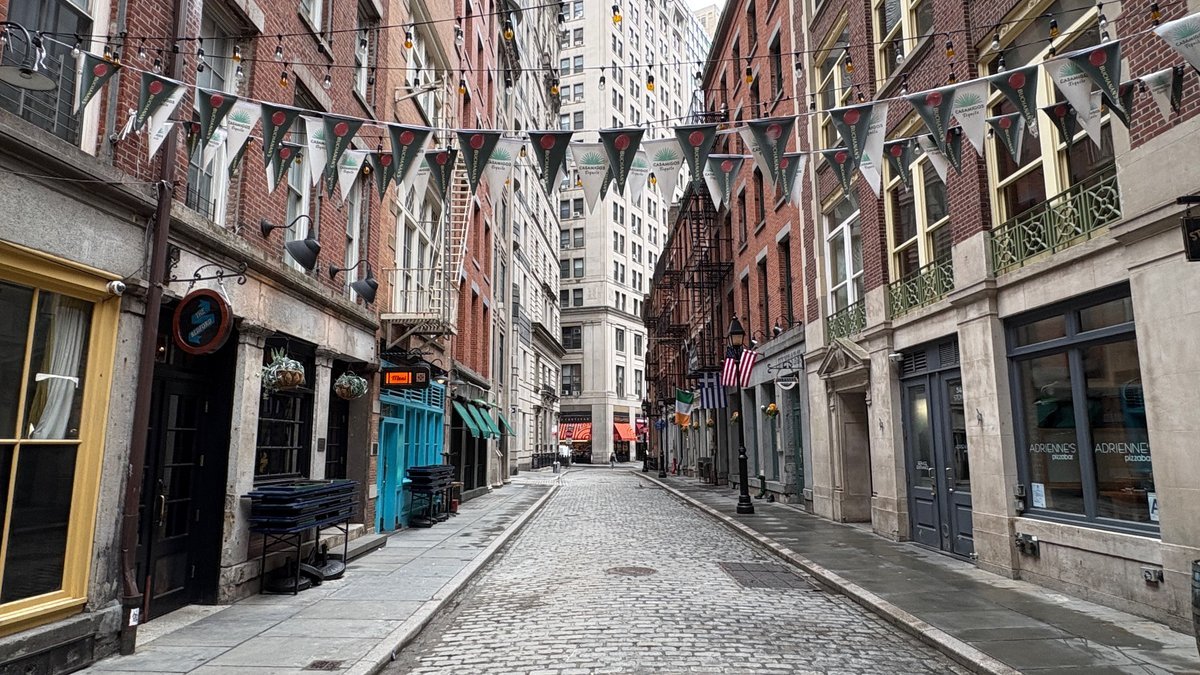
Have you noticed how nobody talks about FiDi as an office district anymore? Someone on r/AskNYC put it well last year: it’s “fast becoming more of a residential neighborhood,” save for the World Trade Center complex. You can feel it. Strollers on Water Street. Dogs waiting outside delis on Broad. StreetEasy named it the number one best neighborhoods to stay in NYC for tourists to watch for 2026 after searches for it jumped almost 47% year over year, which tells you people aren’t just visiting — they’re moving in.
The food scene reflects that shift, though unevenly. Printemps opened its first U.S. flagship at One Wall Street in March 2025, a two-level, 55,000-square-foot luxury store with dining built in, which is about as far from a sad desk-salad district as you can get. Meanwhile the Tin Building at South Street Seaport closed in February 2026 after a few years of trying to be a destination food hall. A Balloon Museum is taking over that space in summer 2026. Make of that what you will.
Where does that leave you at dinnertime? Delmonico’s on Beaver Street is the one I’d send someone to for the room as much as the plate — dishes run roughly $18 to $78, so you can go big or you can go modest and still absorb the atmosphere. Crown Shy at 70 Pine is the newer-money option, tucked into an Art Deco tower, dishes around $18 to $48. And The Dead Rabbit on Water Street genuinely earns the hype, which I don’t say often about a bar with a gift shop energy. If you’re eating on a budget — and the Reddit crowd asks about this constantly, hunting meals under twelve bucks near the WTC — you’re better off in the delis and counter spots on the side streets than anywhere with a hostess stand, and the same money-saving instincts apply across the whole city on a practical guide to visiting NYC on a budget. Prices vary, obviously, and they vary fast down here.

FiDi’s sidewalks are older than your country.
Those cobbled, uneven side streets around Water and Pearl look charming right up until someone rolls an ankle on them in the dark. American healthcare is brutal if you’re
uninsured — one ER visit without coverage can easily run
$3,000-5,000 out of pocket. World Nomads covers emergency
medical, trip cancellation, theft and mugging. Single trips
from around $2–3 per day, or ~$506 for their Annual Plan
covering every trip you take for 12 months. Takes 5 minutes
to set up.

The best things to do in Financial District, ranked by what actually stays with you

Start with the 9/11 Memorial pools, and go early. Each pool covers an acre, and 52,000 gallons a minute pour over thirty-foot black granite walls — the sound is the point. At 8:30 in the morning you can hear it. By one in the afternoon you’re hearing a tour guide’s headset mic instead. The museum at 180 Greenwich runs $33 for an adult ticket, Wednesday through Monday, and here’s the thing worth knowing: Monday evenings from 5:30 to 7:00 are free, reservation required in advance — the full breakdown of hours and ticket tiers is in this 9/11 Memorial and Museum visitor guide. Ninety minutes isn’t enough time for that museum. It’s enough time to be changed by it.
One World Observatory is the other big-ticket item — $44 to $49 per adult, decks on floors 100 to 102 at 1,268 feet, open daily 9 AM to 9 PM. If someone forces me to choose between it and the museum, I choose the museum every time. The view is a view. The museum is a reckoning. But if you’re traveling with teenagers who need altitude, go at 8 PM instead of midday: the crowd thins, the harbor goes to lights, and the elevator ride is the same either way.
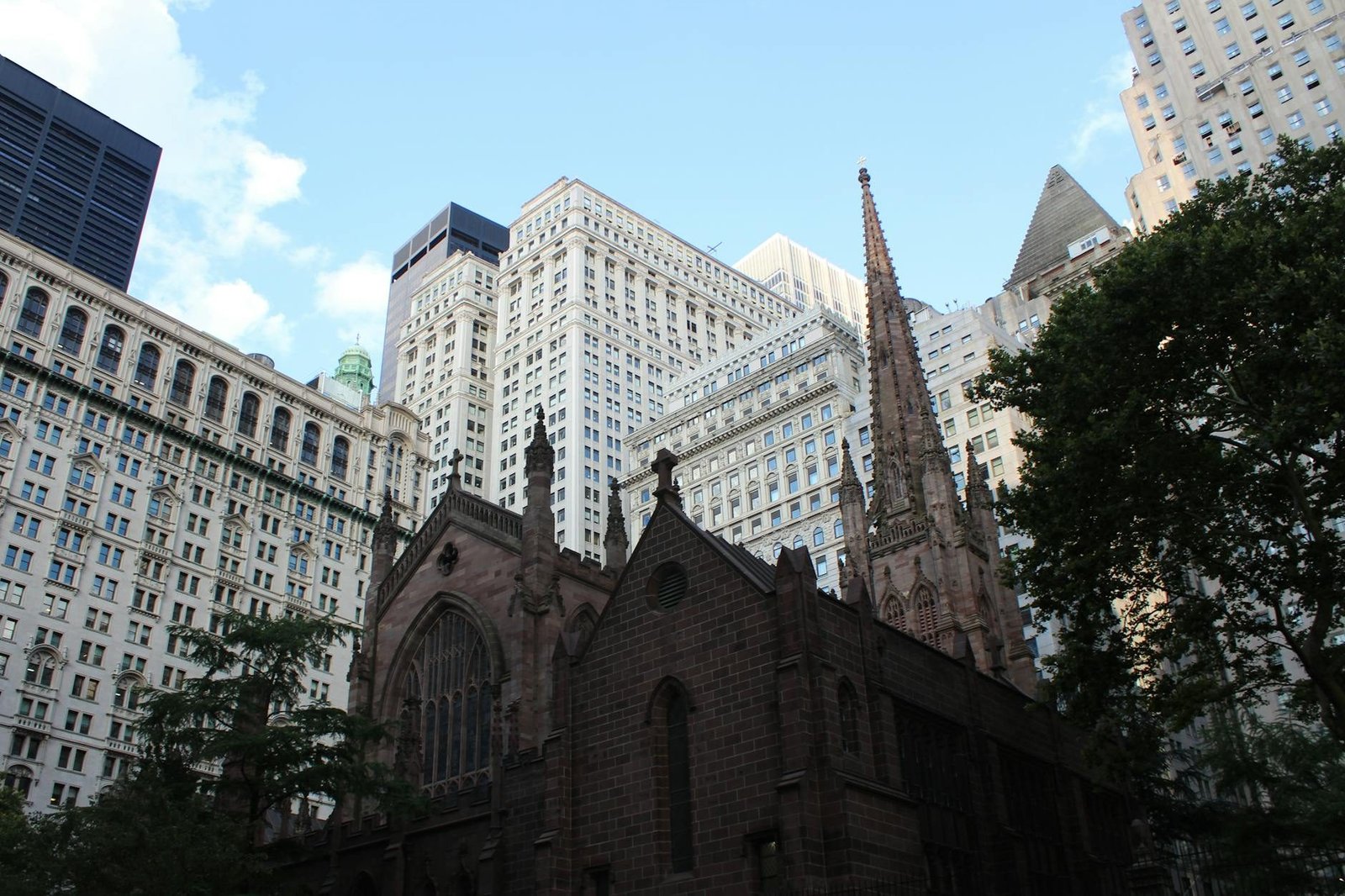
Then there’s the free tier, which is where the district really rewards curiosity. Federal Hall at 26 Wall Street costs nothing, opens weekdays 9 to 5, and is almost always nearly empty — the site where Washington was inaugurated, and you can have it practically to yourself. This whole stretch of blocks is part of a longer walking route covered in the NYC Revolutionary Trail founding history walk. Trinity Church at 89 Broadway, also free, open daily till 6, with the cemetery closing at 4. Have you ever sat in that graveyard while the towers hum around you? It’s the single best free seat in Lower Manhattan.
And the Perelman Performing Arts Center, that translucent marble cube by the memorial, is worth checking for a show. Three flexible spaces, more than sixty seating configurations, up to 1,200 capacity. Most people walk past it assuming it’s an office. What else in this neighborhood are you walking past without looking up?
FiDi hotels go quiet on weekends when the suits leave — book with free cancellation and you can often ride the 15% Getaway Deals discount down.
Where to stay in New York City
| Hotel | Why it fits | Book |
|---|---|---|
| The Beekman | An 1881 landmark built around a nine-story glass atrium you’ll photograph twice. | See tonight’s rate → |
| The Wall Street Hotel | Beaux-Arts luxury with a curated Australian Aboriginal art collection throughout. | See tonight’s rate → |
| Mint House 70 Pine | Roomy Art Deco suites with full kitchens — good for families who cook. | See tonight’s rate → |
| Gild Hall | Mid-century equestrian-chic boutique tucked onto historic Gold Street. | See tonight’s rate → |
| The Cloud One Downtown | High-rise, organic design, and the cheapest way to sleep by the 9/11 Memorial. | See tonight’s rate → |
| Hotel Indigo Financial District | Sleek and modern, steps from Trinity Church and the World Trade Center. | See tonight’s rate → |
| Residence Inn World Trade Center | All-suite pre-war building, full kitchens, free breakfast — family math that works. | See tonight’s rate → |
Browse all NYC hotels on Booking →
Getaway Deals: save up to 15% on stays booked through Booking.com — valid until 30 September 2026.
Getting to the Financial District without wasting an hour
Base subway fare went to $3.00 on January 4, 2026, and the OMNY rolling cap sits at $35 after twelve paid rides in any seven-day window — which means if you’re doing a serious walking week down here, tap the same card or phone every time and stop thinking about it. Physical MetroCards stopped being sold or refilled on January 1, 2026, so if you arrive clutching an old one, that’s a souvenir now.
The station you want depends on the day. Fulton Street handles the A, C, J, Z, 2, 3, 4 and 5 and dumps you two minutes from the memorial. Wall Street Station on the 2 and 3 puts you in the middle of the stone canyon. Rector Street on the 1 is my quiet favorite — fewer people, and you surface facing Trinity.
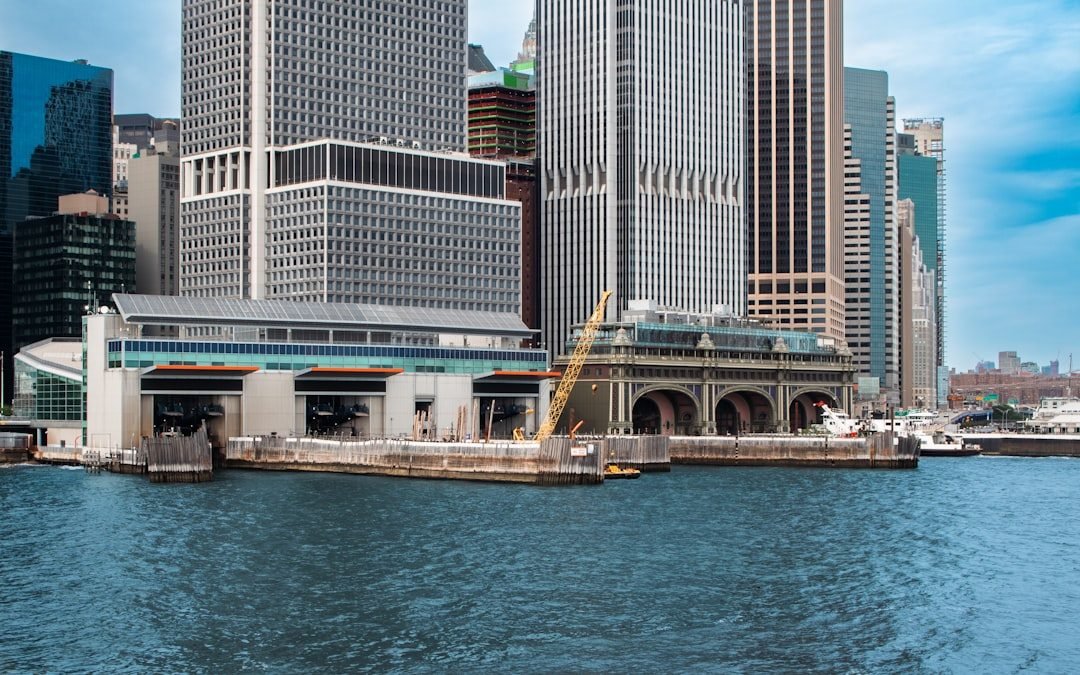
Here’s where tourists blow it: they pay for a harbor cruise. Most visitors book a ticket to see the Statue of Liberty from the water, or wonder in the first place whether the Statue of Liberty is worth visiting. Locals walk to Whitehall Terminal at 4 Whitehall Street and take the Staten Island Ferry free Statue of Liberty views, which is free, runs 24/7, and departs every 15 to 30 minutes. Stand on the right side going out. Actually, scratch that — stand on the starboard side going out and cross over on the return, because the skyline coming back at dusk is the better half of the trip and nobody tells you that.
Coming from JFK? A yellow cab runs a $70 flat rate to Midtown plus roughly $7 in tolls, landing somewhere around $85 to $110 with tip, and rideshare doesn’t reliably beat it. Driving in yourself is the real mistake — the Congestion Relief Zone has been charging passenger vehicles $9.00 at peak to enter Manhattan below 60th Street since January 2025, and FiDi is about as deep into that zone as you can get. Why would you pay for the privilege of circling for parking?
Is a day in FiDi worth it, or should you just pass through?
I went back and forth on this for a long time. The case against FiDi is real: the streets are dark by 3 PM in December, the wind off the harbor cuts through everything, and there are blocks where the only retail is a bank branch and a place selling phone cases. Add the 2 World Trade Center construction that restarted in July 2026 — a 55-story tower for American Express, not finishing until 2031 — and you’ve got scaffolding and jackhammers layered onto an already noisy district.
But then I keep thinking about density. Where else can you stand at one point and be a ten-minute walk from a 1,776-foot tower, a colonial tavern, a Revolutionary-era graveyard, a free ferry with the best harbor view in the country, and a gold vault eighty feet down in Manhattan bedrock holding 507,000 bars? That last one — the Federal Reserve vault — is the fact I bring up when someone tells me the neighborhood is boring. Six thousand-plus metric tons of gold, sitting under people arguing about lunch.
So the verdict I’ve landed on: FiDi is not a full-day neighborhood for most people. It’s a spectacular half-day, and the half you choose matters enormously — the same “pick a few blocks, go deep” logic applies across the whole city, as I lay out in this weekend in NYC itinerary planning guide. Give it 8 AM to 1 PM and you’ll get the memorial in near silence, Federal Hall to yourself, Trinity’s cemetery before the 4 PM close, and the ferry before the commuter crush. Give it 1 PM to 6 PM and you’ll get crowds, construction noise, and a sense that you’ve been herded. Same streets. Completely different city.
Then eat somewhere with age on it. Fraunces Tavern on Pearl Street runs about $16 to $38 a dish and gives you the Revolutionary-era version of this neighborhood — which is the thing people forget about the best things to do in Financial District. This wasn’t built for finance. Finance moved into it.
How long do you need in the Financial District, and what’s worth paying for?
How many hours should I plan for the Financial District?
Four to five hours covers it properly, and I’d run them from 8 AM to 1 PM on a weekday. Anything after 1 PM turns the memorial plaza into a crowd-management exercise.
One World Observatory or the 9/11 Museum — which one if I can only do one?
The museum, at $33 an adult. The observatory is $44 to $49 for a view you can approximate for free on the Staten Island Ferry; the museum has no substitute anywhere.
Are there genuinely free things to do near Wall Street?
Plenty. Federal Hall at 26 Wall Street (weekdays 9 to 5), Trinity Church at 89 Broadway (daily until 6, cemetery closes at 4), the memorial pools themselves, and the Staten Island Ferry from 4 Whitehall Street, free around the clock.
Is the Financial District dead on weekends?
Less than it used to be — it’s shifting residential, and StreetEasy ranked it the top NYC neighborhood to watch for 2026. Weekend mornings are quiet in the best way. Weekend afternoons at the memorial are the busiest hours of the entire week.
Where should I eat if I want the historic version of the neighborhood?
Fraunces Tavern on Pearl Street, roughly $16 to $38 a dish, or Delmonico’s on Beaver Street if you want the old steakhouse room. Skip anything with a laminated menu near the memorial.
Do I need a guided tour to make sense of it?
Not strictly, but a 9/11 Memorial and Financial District walking tour runs around $35 and fills in the layers you’d otherwise walk right over. If you’d rather self-guide, start at Trinity, walk down Broadway, and let the street grid do the storytelling — it’s the oldest grid in the city and it still bends around things that vanished centuries ago.
If you take one thing from this: go early, and give yourself permission to sit down in that graveyard for twenty minutes doing nothing. The best things to do in Financial District aren’t all things you buy tickets for — some of them are just standing still in a place that’s been busy for four hundred years and noticing that, for a moment, it isn’t.